


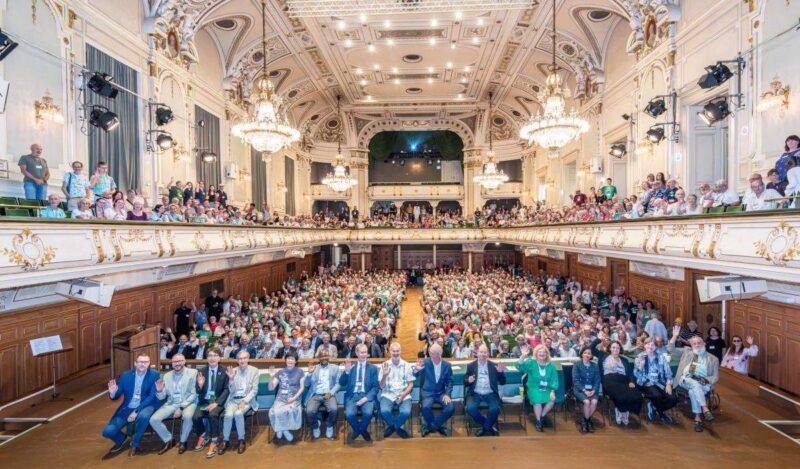
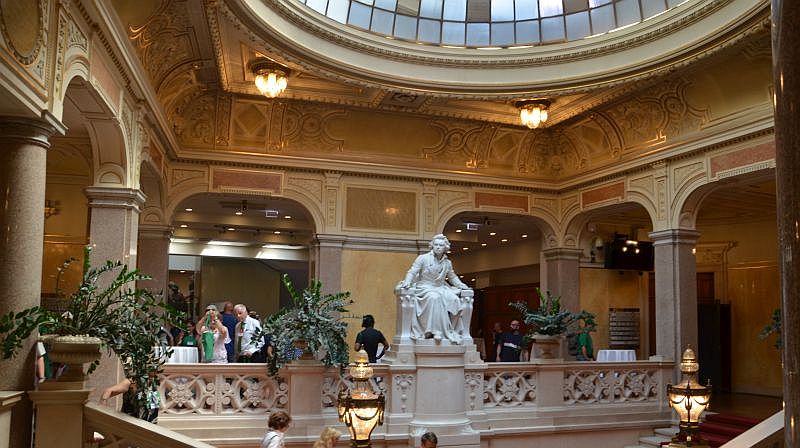
The Graz Congress Center, which hosted the 111th Universal Congress of Esperanto is situated right in the heart of this city of over 300,000 residents.
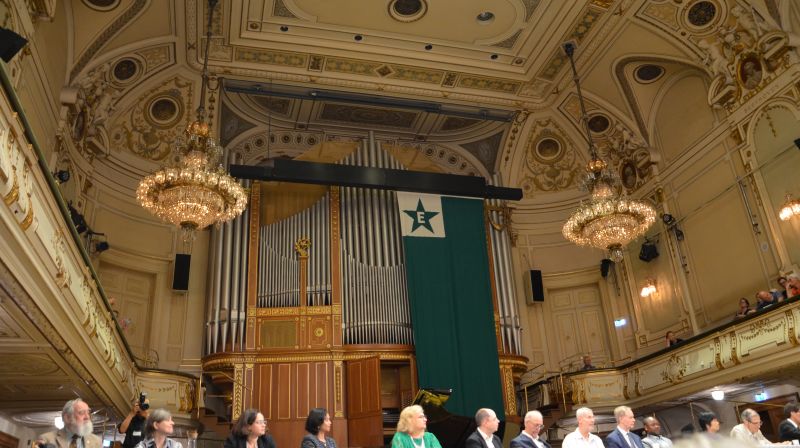
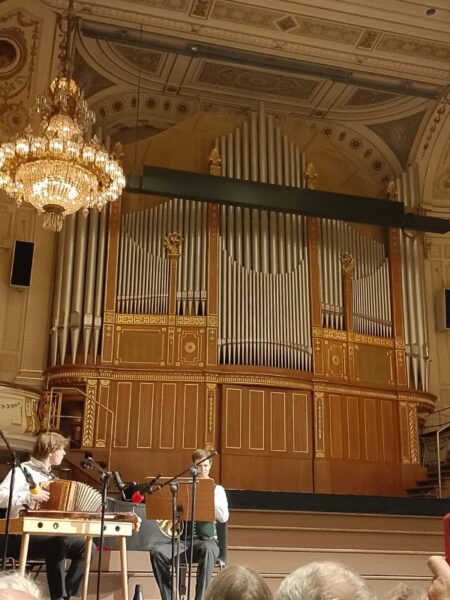
It is a beautiful, historic building dating back to 1885. During the Congress, over 1,000 Esperantists from around the globe gathered across 19 halls. In the grand concert hall – specially renamed Zamenhof Hall for the duration of the event – we listened to several wonderful international concerts that will stay with us forever.
As first-time attendees, we had the opportunity to meet people from all over the world who are united by Esperanto – an extraordinary way to communicate across borders. We managed to have basic conversations with participants from France, Turkey, and Germany, which brought us great joy because it proved to be far less intimidating than we had initially thought.
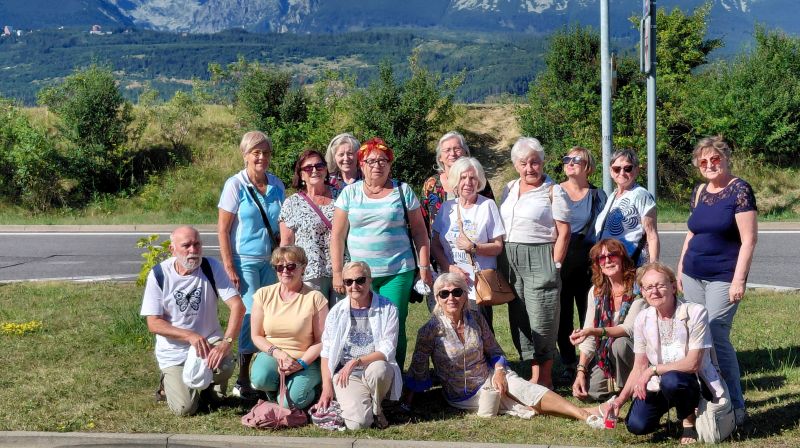
The trip to Graz also allowed us to explore parts of Austria and its landmarks, as well as other places along our route through Hungary and Slovakia. Participating in the Congress inspired us to raise the bar in our language learning.
To conclude: some won the world through song, others through knowledge and others with heart – and in our Esperanto group, we all grew fond of one another.
Ula Piasecka i Barbara Libera
On August 2, 2026, the second day of the Congress, two guys stepped onto the stage as part of the National Evening. One looked quite serious, while the other had a distinctly rock-‘n’-roll vibe at first glance. They turned out to be the Lugisch brothers from Styria.
The serious brother played the French horn – a very demanding instrument. The other played the accordion, zither, and harmonica, and both sang. They put on such an incredible showcase of classical and folk music that it gave us goosebumps. True Virtuosos with a capital “V”.
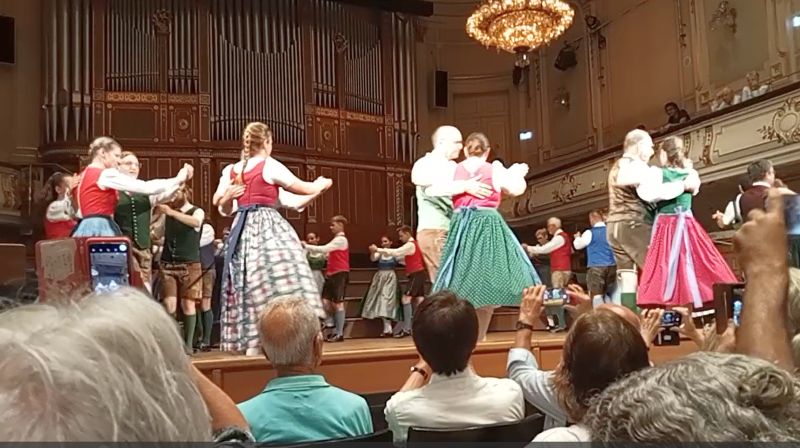
Next came 16 couples from a local folk ensemble: the ladies wore corset dresses, blouses, and aprons, while the men wore short leather trousers (lederhosen), white shirts, vests and thick knee-high wool socks. Considering the sweltering heat, massive respect to them! They danced their local folk dances with great confidence; it was beautiful and varied.
The men performed the traditional Alpine dance, the Schuhplattler, rhythmically slapping their thighs, knees and shoes. The couples spanned multiple generations, pairing younger and older dancers. The older gentlemen moved with grace and charm, while the younger ones were still learning. What struck us most about their performance was the deep mutual respect. The couples remained completely focused on each other throughout the dance, embracing tenderly and sharing warm eye contact without looking away. The musician accompanying them was fantastic as well.
In Graz, we also stumbled upon a dumpling bar called “Pierogarnia u ADRIANNY”, which served first-class pierogi – Ruthenian (potato & cheese), sweet cheese, meat, spinach, and buckwheat. The owner is a Polish woman from Masuria, very chatty and welcoming. Her husband is a veterinarian and her daughter is a tennis player.
All good things must come to an end. On the way back in our minibus, we enjoyed custom sing-alongs and songs written specially for the occasion.
Wanda Śmigielska i Teresa Wartak
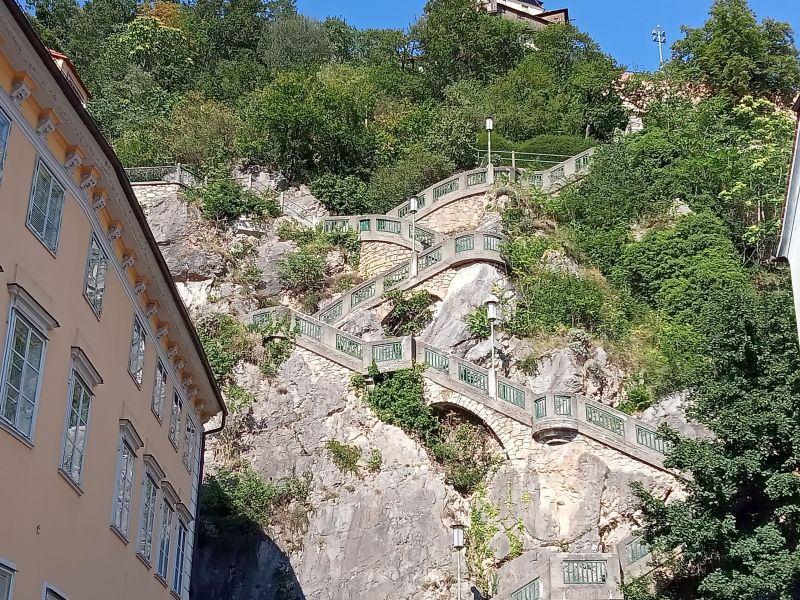
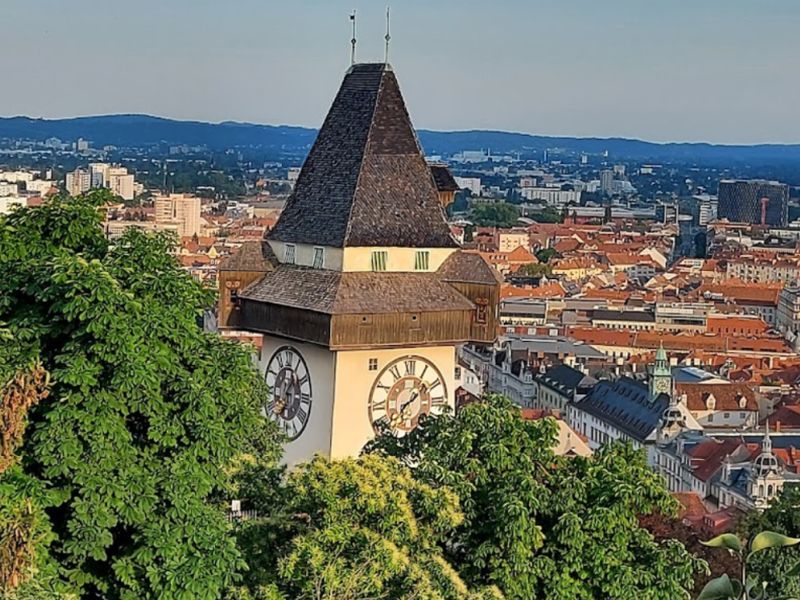
In the center of Graz’s Old Town lies the Schlossberg. It is a beautiful, green hill perfect for walks, offering sweeping views of the city and surrounding areas. You can reach the top by climbing 260 steps or, as we did, by taking a relaxed stroll along shaded paths. Others took the elevator (the fastest way to the top) or the Schlossbergbahn funicular.
At the summit stands the Clock Tower – the iconic symbol of Graz – along with many historic buildings and attractions.
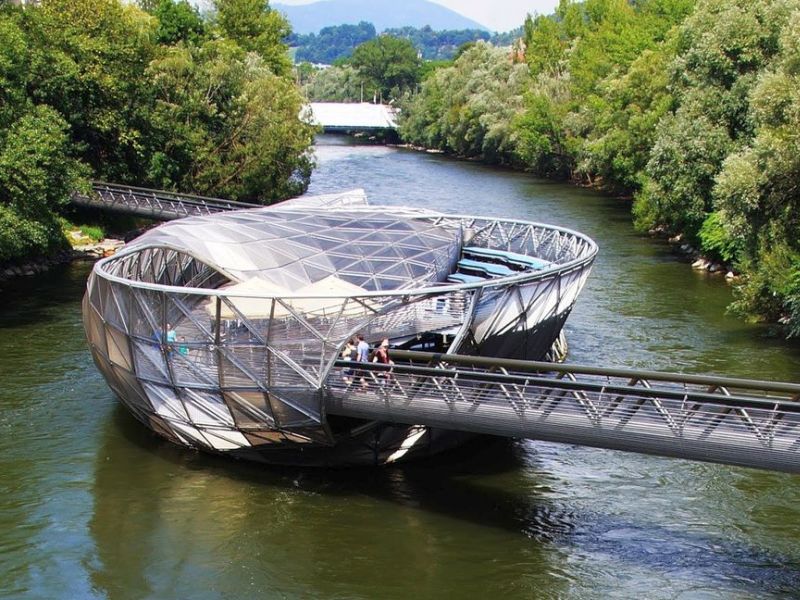
Island Café: The Mur River flows through Graz. Right in the middle of the river, under a glass dome, sits a floating structure with direct water views where you can enjoy coffee, a glass of wine or a light snack – the Murinsel café. The ice cream and cold drinks tasted delicious there.
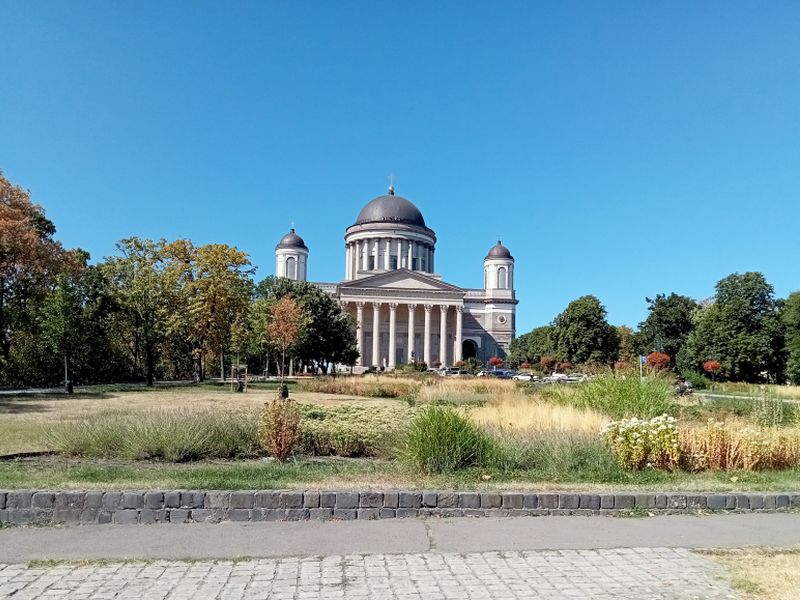
On our return journey we visited Esztergom, home to a grand and majestic Basilica. Situated right on the Danube along the Hungarian – Slovak border, the town possesses the quiet charm of rural Hungary. The Basilica is the largest church in Hungary and draws hundreds of thousands of pilgrims every year. Two historic events connect this site to Poland: King John III Sobieski visited here after defeating the Ottoman forces and Pope John Paul II visited in 1991.
A park surrounds the sanctuary and from the hill where it stands, you can admire panoramic views of the Danube, the Maria Valeria Bridge (named after the daughter of Empress Sisi and Emperor Franz Joseph) and Slovakia.
Krystyna Sochacka
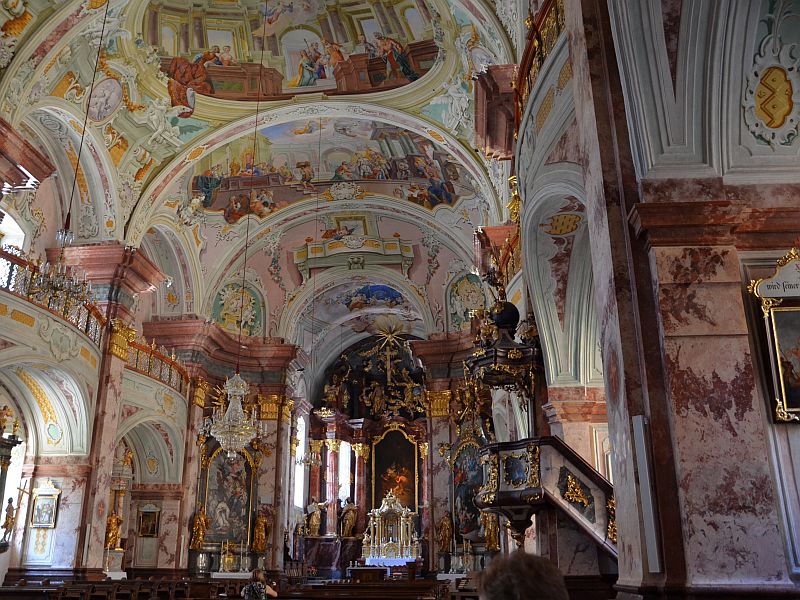
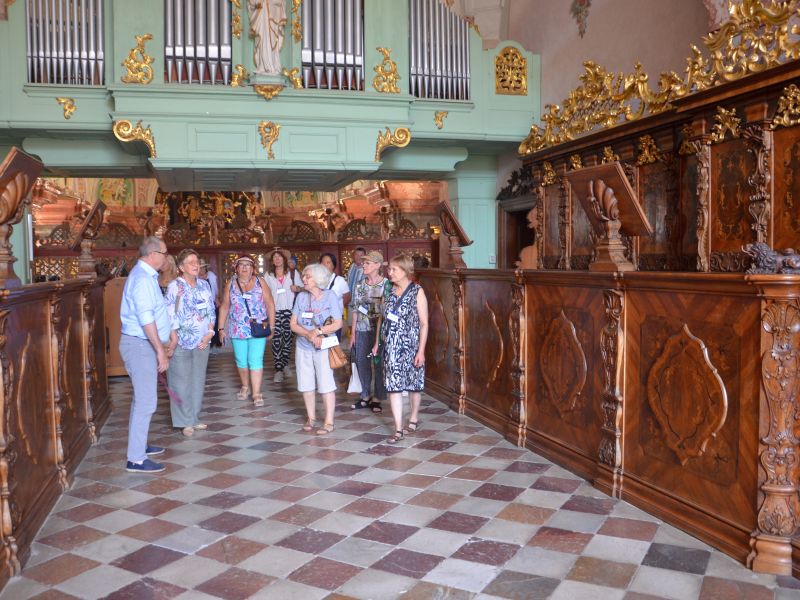
Rein Abbey is located 20 km north of Graz. It is the world’s oldest continuously active Cistercian monastery, founded in 1129.
It captivates visitors with its beautiful Baroque architecture, richly decorated interior, and peaceful historical atmosphere. As a key landmark of Styria, it connects history, art, and monastic tradition. We toured its well-equipped library, housing medieval manuscripts and books published across centuries of the abbey’s existence.
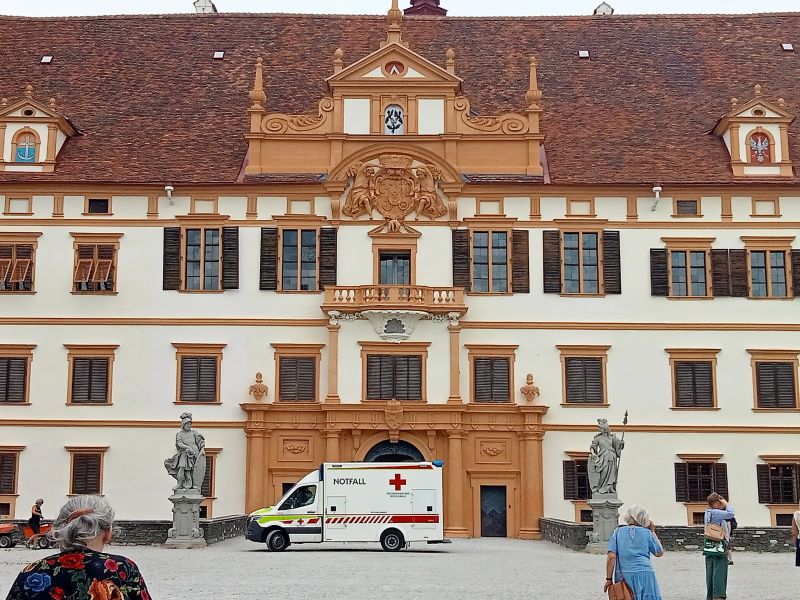
Eggenberg Palace sits just outside the Graz city center. It is one of Austria’s finest Baroque palaces and a designated UNESCO site. Surrounded by a vast park, visitors can enjoy scenic avenues, historic sculptures, and lush nature. The palace is also famous for its symbolic architecture designed around the calendar and cosmic order: its 4 towers represent the seasons, 12 gates symbolize the months and 365 windows stand for the days of the year. The beautifully preserved interiors house numismatic, archaeological, and artistic collections from the Universalmuseum Joanneum.
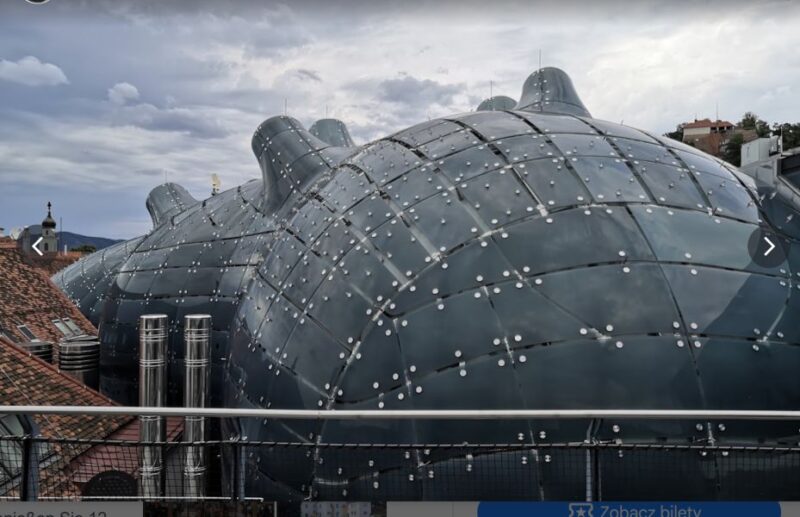
The Modern Art Gallery in Graz, known as Kunsthaus Graz is a strikingly unique piece of contemporary architecture. Its rounded, futuristic shape resembles a “friendly alien” from outer space, creating a bold contrast with the city’s historical buildings. The exterior is made of polymer panels, with north-facing nozzles acting as windows. It looks particularly fascinating in the evening when the facade lights up.
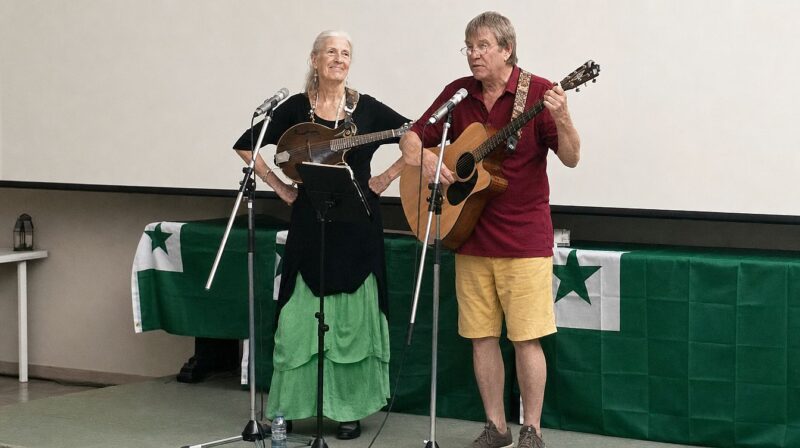
One of the optional sessions in the congress program turned out to be a regional meeting of the UEA (Universal Esperanto Association) commission for North America, South America, and the Caribbean. Representatives from various countries spoke about the growth and activities of their national Esperanto organizations, sharing both their achievements and challenges.
Ewa Merha i Barbara Głód-Szarzyńska
And just like that, Wednesday arrived. The Congress officially closed. We set off on a 140-kilometer drive. Travel conditions were pleasant, with light air conditioning in the minibus. Outside, the green landscape was soothing to the eyes. However, after hot days and short nights, a quick nap was much needed.
Suddenly – what was that? Was I dreaming, or was someone calling out? “Who wants a cookie, a candy, a piece of chocolate, or maybe a plum, some grapes, or an orange?” Why be surprised? That’s the joyful, generous spirit of our Esperanto brotherhood! And that’s how it went the entire journey.
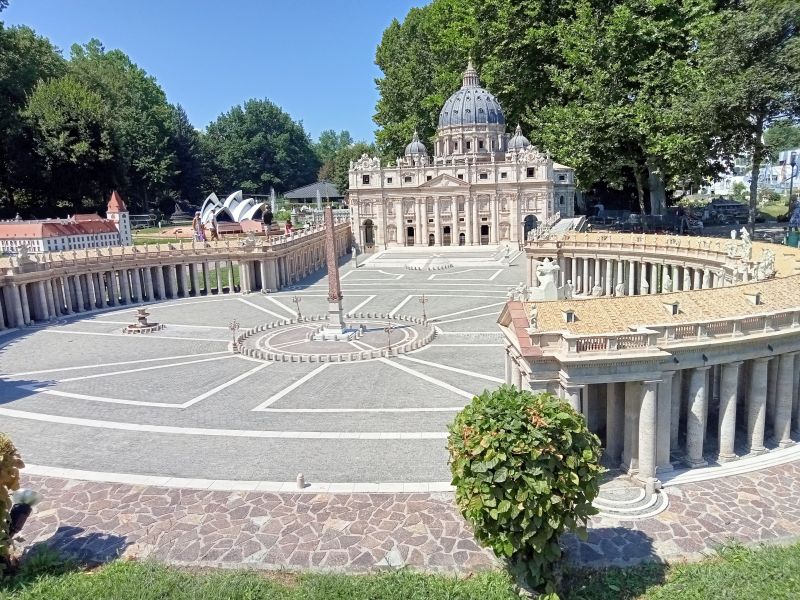
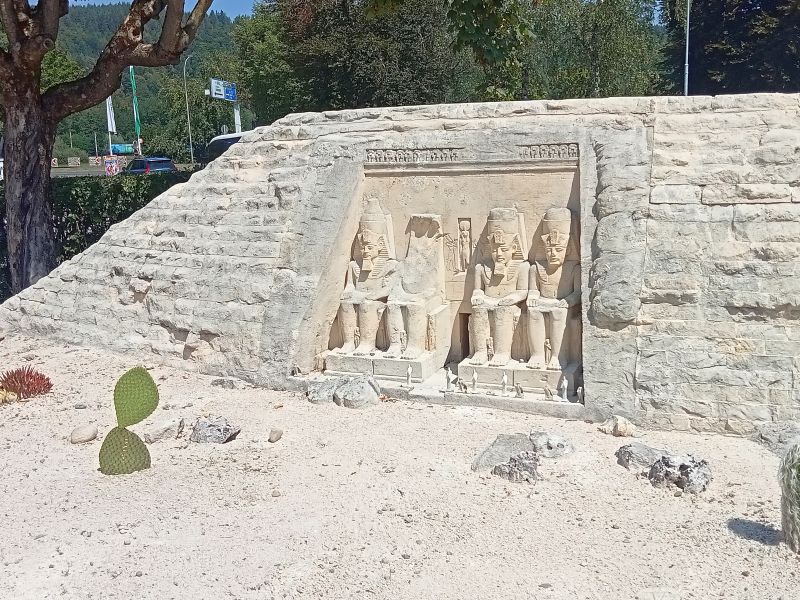
Once we arrived: endless oohs and aahs! Here was Minimundus in Klagenfurt – the famous Miniature Park. Wow, it’s quite big! Spanning 26,000 m², it features 166 models of famous landmarks from 50 countries on a 1:25 scale.
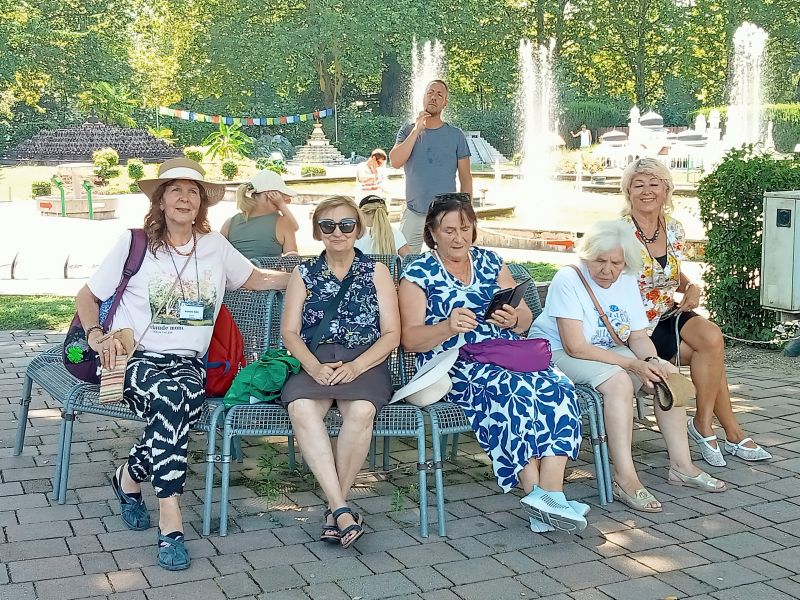
And so it began: reading information boards, taking in the sights, identifying buildings and, of course, snapping endless photos. We had plenty of time, so we rested on benches and kept returning to our favorite models.
Some of the most recognizable and impressive sights included:
1. St. Peter’s Basilica in the Vatican – a true marvel that took 7 years to build.
2. The Eiffel Tower – the model stands over 12 meters tall.
3. CN Tower in Toronto – the tallest model at an impressive 23 meters.
4. The Taj Mahal – intricate and stunningly beautiful.
5. Sagrada Família in Barcelona – so many details, a true joy to admire up close.
6. And a special spot for number six… Schlossberg – the Castle Hill of Graz with its Clock Tower, where the large hand points to the hours and the small hand points to the minutes! Napoleon intended to demolish the tower, but the citizens of Graz pooled their money together to buy it back from the French. Hooray!
Well, we absolutely loved it! Some even updated their profile pictures on their phones to feature one of the miniatures. The exhibits didn’t stop there – there were model trains, a Ferris wheel and even a space shuttle.
Naturally, we also went to the 4D cinema. It shook us up and gave us a few scares, but it was great fun.
And was that all? Oh no, not at all – next came a delicious and lavish dinner.
Krystyna Szpilowska
Graz – the capital of Styria and the second-largest city in Austria – is situated near the Styrian Alps. The city originally developed on the site of an earlier Slavic settlement named Gradec.
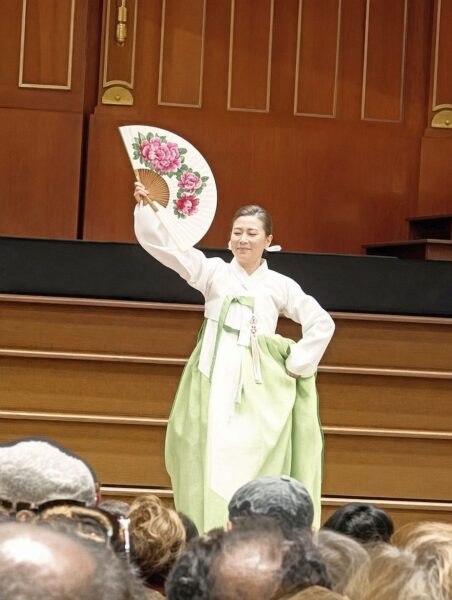
The Congress was held in a beautiful 19th-century building, offering a fascinating daily program of activities, concerts and reunions with friends old and new. Nearby Japanese and Chinese restaurants provided great culinary experiences. The final International Evening featured captivating performances by representatives from various nations. A performance by a Korean participant incorporating traditional dance elements left a lasting impression, as did the Austrian delegation, who enhanced their dance routine with light effects set to classical Austrian compositions.
Every day on our way to the congress venue, we walked through the pedestrian zone of Graz’s charming Old Town. Live concerts took place here in the evenings as well. A performance by a Cuban band particularly caught my eye – the entire street came alive, dancing to their energetic rhythms.
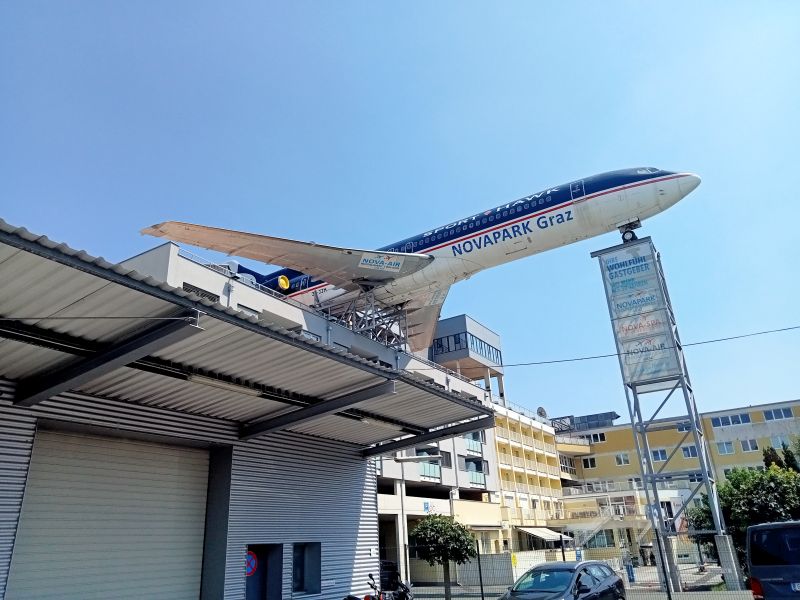
Our stay was complemented by excursions to the Novapark Flugzeughotel, Eggenberg Palace and Minimundus – a miniature world near Lake Wörthersee offering learning, fun and relaxation.
I look back on this trip with great warmth. My thanks go to all participants and to my roommate. The organization and atmosphere both during travel and throughout our stay were wonderful.
Opyd Stanisława
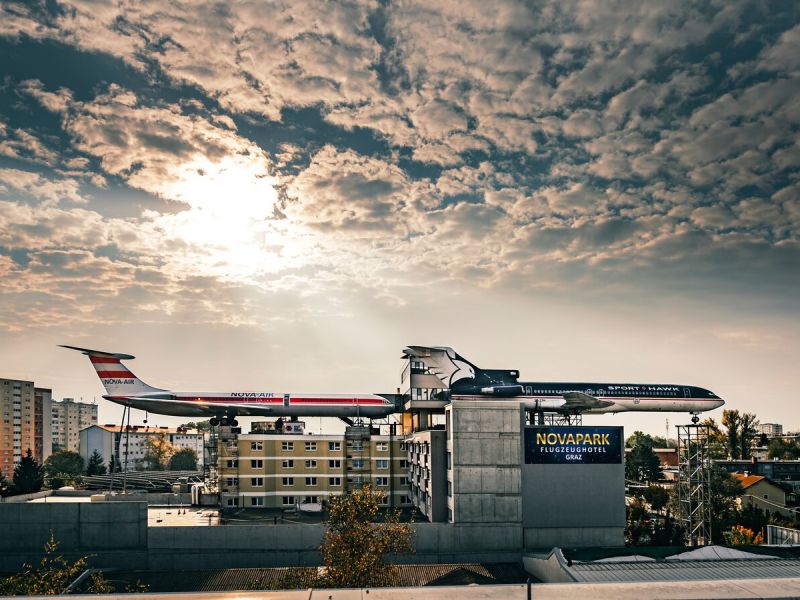
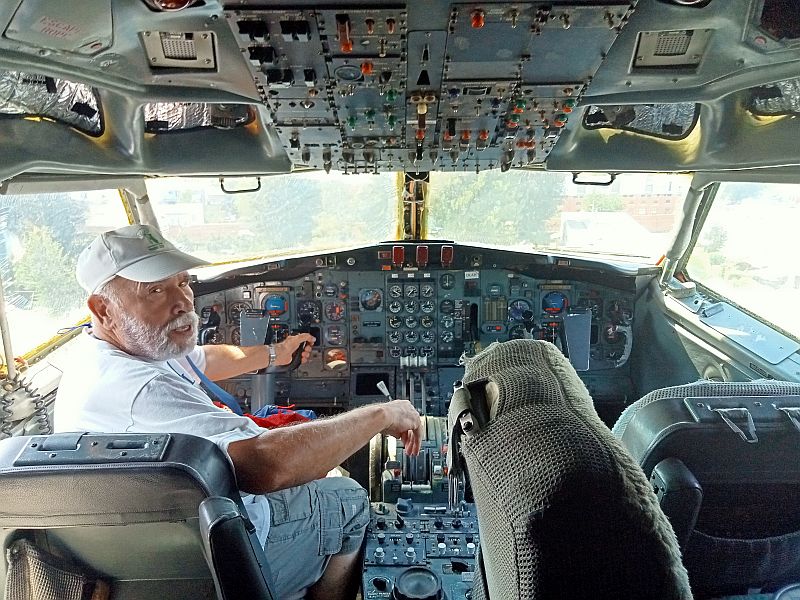
On August 6, a small group of us toured the restaurant located at the Novapark Flugzeughotel in Graz. The restaurant can be toured during hours when it is closed to diners. It is set inside the fuselage of a Boeing 727 that once belonged to the last president of communist Czechoslovakia. Right beside it sits an Ilyushin Il-62M, which also houses a restaurant and bar. Both aircraft are mounted on the hotel roof, over 20 meters above ground level.
We also visited GATE 08 – one of Europe’s largest flight simulation centers.
We viewed three professional flight simulators equipped with advanced computers replicating real-time flight systems: a Cessna, a Boeing 737-800 NG, and an Airbus A319/A320. They even demonstrated a night landing simulation of an Airbus A320 for us.
Marian Kocyk
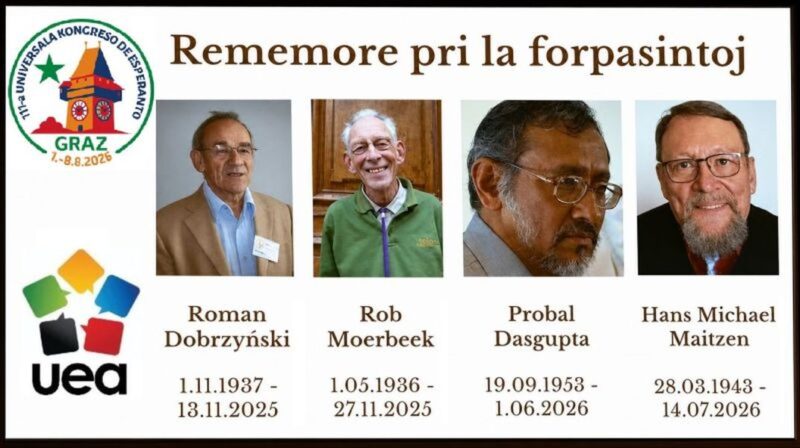
For me, attending the Universal Esperanto Congress brings a touch of sadness because many gesamideanoj (fellow Esperantists) have passed away, so I rarely bump into old friends these days. On the positive side, having attended so many congresses over the years means I know several of the speakers.
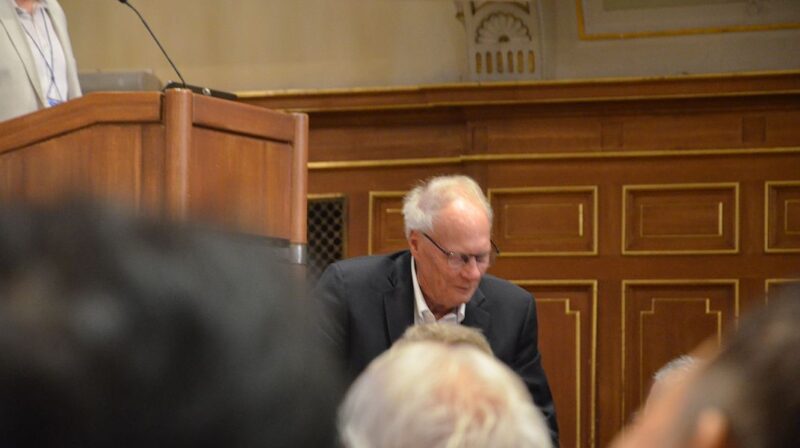
That is why I chose the IKU4 lecture on Walt Whitman, “Poet of the New United States,” presented by Humphrey Tonkin, whom I remembered from previous congresses. He gave a vibrant, engaging and witty presentation about the poet. I will always remember his great sense of humor and I was thrilled to expand my knowledge.
Unfortunately, I cannot say the same for the second lecture I attended, “The Psychological Benefits of Zamenhof’s Proverbs.” I hoped to hear at least one of the proverbs I knew from textbooks, but in vain. In my opinion, the speaker presented his ideas unclearly, so I lost patience and left the room.
Still, I am glad I had the chance to see it.
Jolanta Kieres
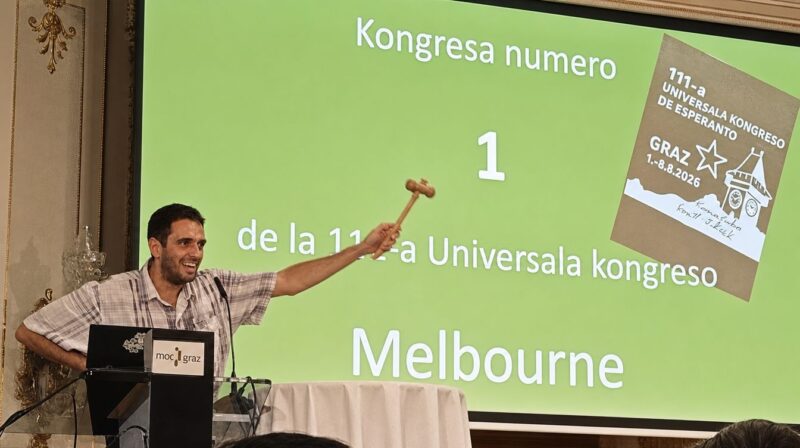
A Congress with Melpomene – Artistic Arrangements.
The grand 19th-century palace in the heart of Graz, serving as the Congress Center, proved to be a magnificent venue for numerous Esperanto cultural events.
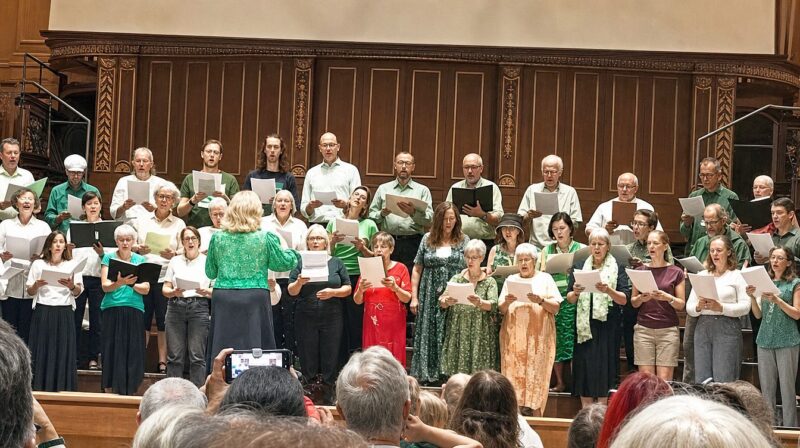
The Stefaniensaal concert hall, renowned for its excellent acoustics and balcony seating, comfortably accommodated all congress attendees. On the impressive grand organ – often hailed as the king of instruments – the assistant organist from the Basilica of Saint-Germain in Paris performed in tandem with a young soprano, Linda. The stage hosted Esperanto musical groups, dance troupes, orchestras, virtuosos from around the globe and a 100-member International Esperanto Choir celebrating its 50th anniversary, conducted by Zdravka Boytcheva.
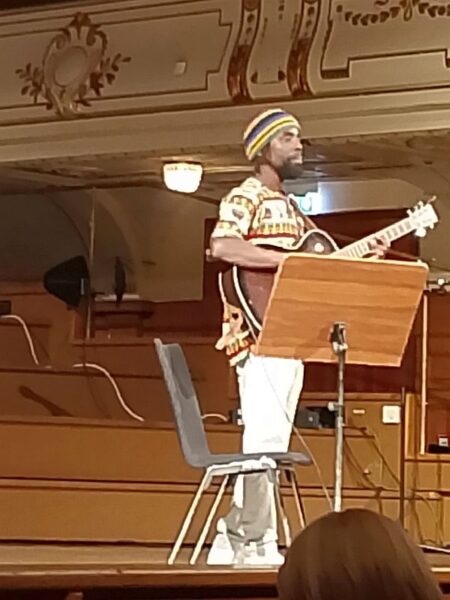
A standout moment was a concert by Abel Massiala from Africa, who accompanied himself on guitar while singing songs in several African dialects, five European languages and Esperanto.
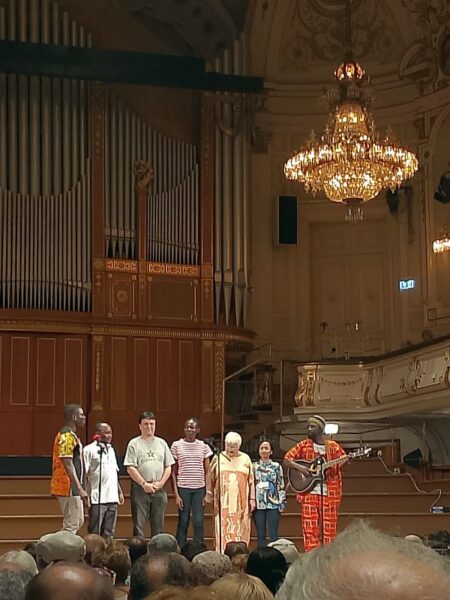
For the International Evening – where anyone could share a short artistic performance – Abel Massiala assembled an impromptu vocal and instrumental ensemble of volunteers across several continents, creating a heartwarming highlight of international Esperanto fellowship.
To conclude, a fantastic surprise awaited everyone: a virtuoso premiere performance of the “Esperanto Waltz” for piano, originally composed in 1951 by Peter Schwarz for the Austrian Esperanto Congress. The black-and-white keys of the Steinway piano carried its melody out to the world.
It was a slight shame that Polish culture was not featured in a dedicated presentation during this year’s Congress.
Alicja Skalska, Krystyna Słaby
Leave a Reply