April 13: We hopped on a train… and not just any train… the INTERCITY at 1:10 PM, and headed off toward Warsaw. The journey was cool – numbered seats, everyone had a place to sit, and we even had those fold-out tables. We reached Warsaw Central at 5:48 PM and from there, we caught the train to Białystok. Waiting for us at the station in Białystok was NINA, an Esperantist with a capital “E” We gave her a warm welcome, and Nina led us to the bus stop and walked us all the way to the Hotel IBIS, where we were “sorted” into double rooms. We made plans for day two of our trip, which was April 14.
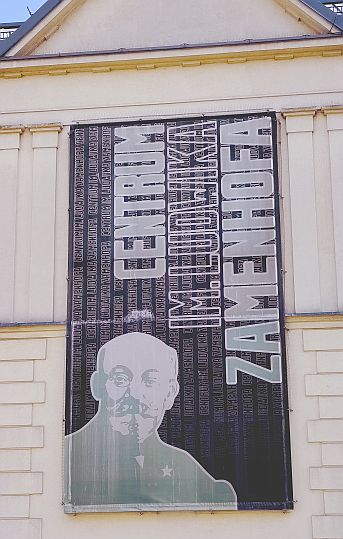 . April 14, 2026: The group kicks off their adventure to discover the treasures of the Podlasie region.
Nina Pietuchowska took on the role of our tour leader and guide; she’s an Esperanto teacher for various courses and events like SES, BET, Italian Congresses, and so on.
Białystok is the capital of the Podlaskie Voivodeship—an administrative, economic, cultural, and scientific hub. It’s a city where different cultures and traditions blend together, and where you can try all sorts of flavors. It’s also the city of Ludwik Zamenhof. This is where the famous doctor and creator of Esperanto was born. Today, Nina is leading us along the Esperanto and Multi-Culture Trail—she tells us stories about the history of the places we pass: the school where he started his education before moving to Warsaw, his family home, and the house of Jakub Szapiro, another important Esperantist. We’ll see the iconic Kościuszko Market Square and historic temples…
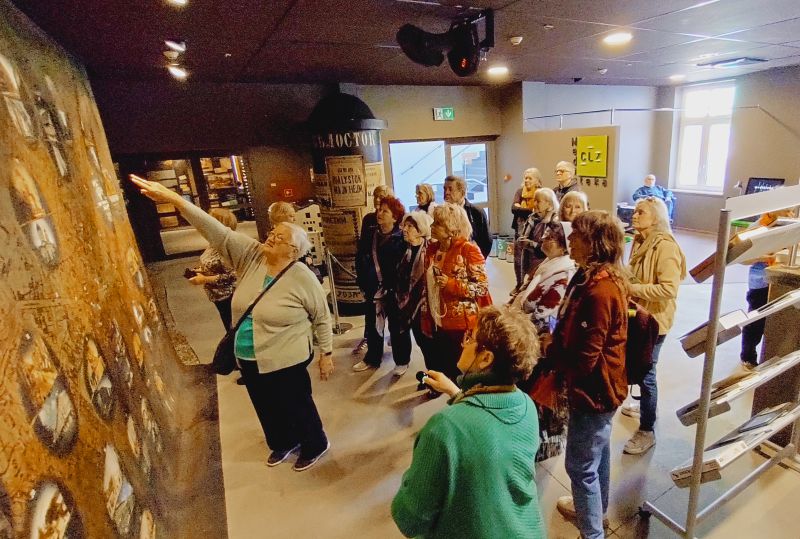
We visited the Ludwik Zamenhof Center, which has a rich collection from that era in the exhibition called “Young Zamenhof’s Białystok.” Then we headed toward the Branicki Palace, the “business card” of Białystok. Even from a distance, the “Gryf” Great Gate and the impressive Baroque Palace—often called the “Versailles of the North”—catch your eye. The lavish interiors, the French-style park and gardens, and the museum’s rich collections are absolutely captivating. This is also where the Medical University and the Museum of Pharmacy are located.
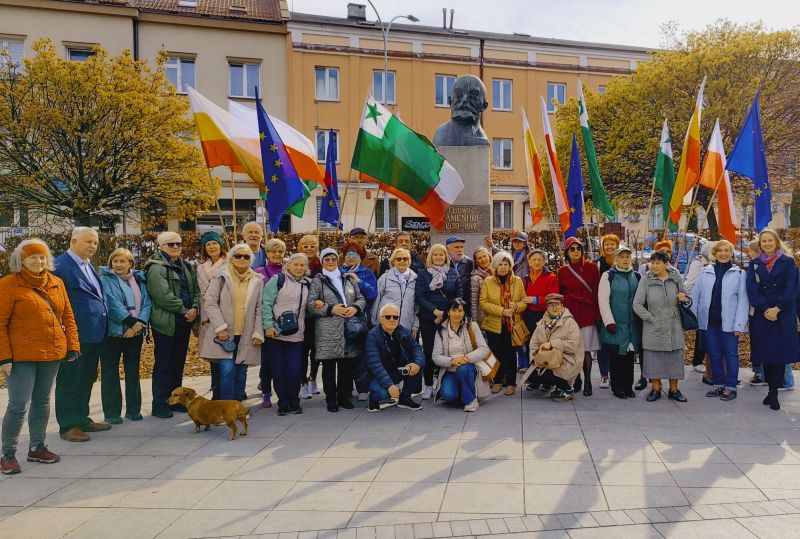
April 14 marks the 109th anniversary of Ludwik Zamenhof’s death. Our group was invited by the Białystok Esperanto Society and the Białystok Cultural Center to honor this anniversary. Flowers were laid at the monument of the Patron of Esperanto. There were speeches by organization representatives and a commemorative group photo. We also documented our meeting with another group photo at the “Young Zamenhof” monument.
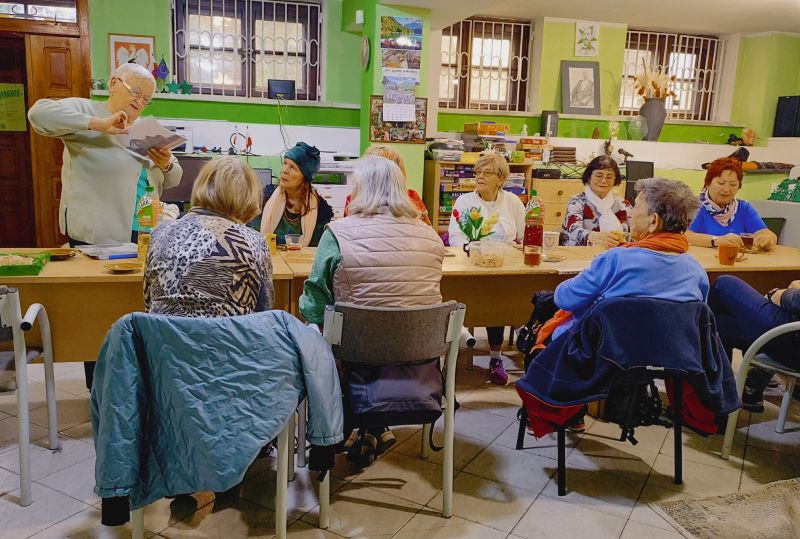
We ended the packed program of our first day in a lovely atmosphere, meeting with local Esperantists at their headquarters. Even there, our tireless guide Nina shared her archives and stories from the history of her beloved city.
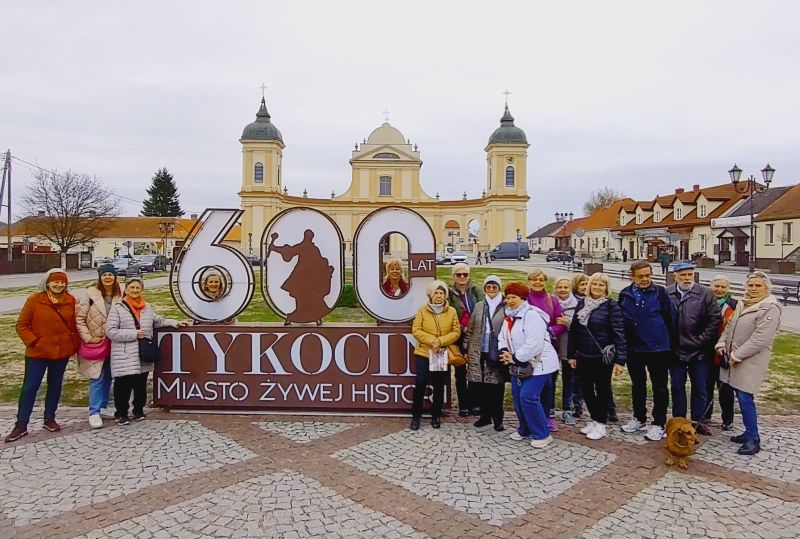
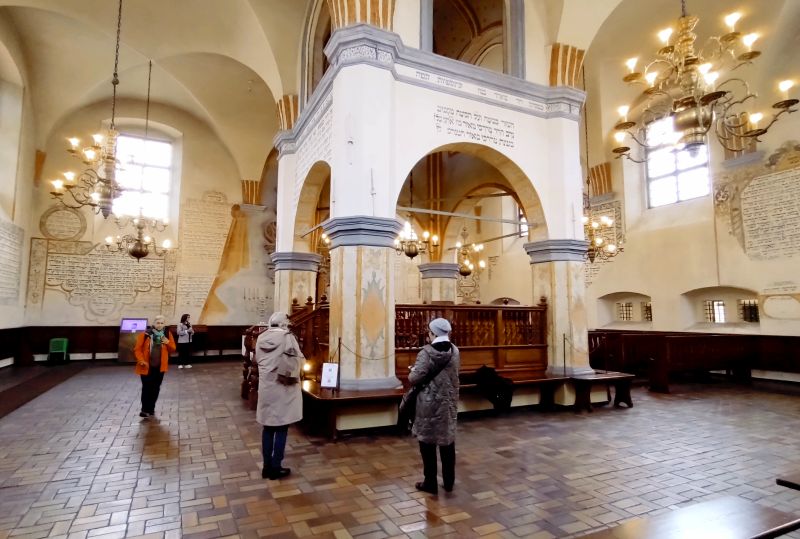
Day 2: This day was filled with two trips. The first was to Tykocin – a charming town about 30 km west of Białystok. There’s a late-Baroque church there (Holy Trinity). It has an imposing, monumental shape that really makes an impression. We toured the Great Synagogue, which is very well-preserved and has a large collection of Judaica. Right next to the synagogue is the Tejsza restaurant, which serves Jewish cuisine. In Tykocin, at the castle, King Augustus II established the Order of the White Eagle back in 1703—a monument commemorates this. On the other side of the Narew River stands a royal castle rebuilt by a private owner.
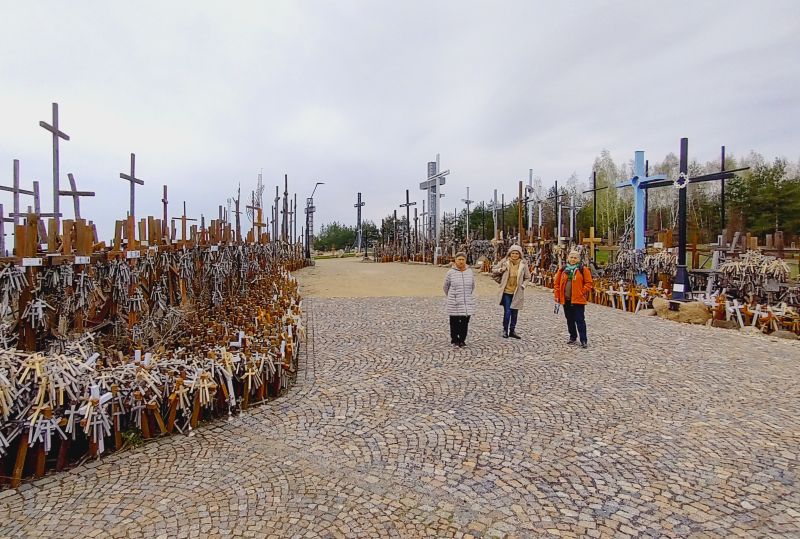
The second trip of the day was to Święta Woda (Holy Water), a spring with miraculous properties. There’s a “Hill of Crosses” there where pilgrims leave crosses behind. All of it is very moving. It was an intense day that left us with many positive impressions.
Day 3: We visited the town of Supraśl, located near Białystok.
It’s a lovely town known for its rich history, monuments, and unique atmosphere. Supraśl has a history dating back to 1501, when an Orthodox Monastery was moved from Gródek to the “Suchy Hrud” wilderness. Its founder and main benefactor was the Voivode of Nowogródek, Aleksander Chodkiewicz.
The legend regarding the monastery’s founding says that the monks from Gródek, after several days of prayer, let a wooden cross with holy relics float down the Supraśl River, asking Divine Providence to stop it in the place best suited for a monastery.
We started our tour with the Monastery of the Annunciation, one of the most important Orthodox monasteries in Poland.
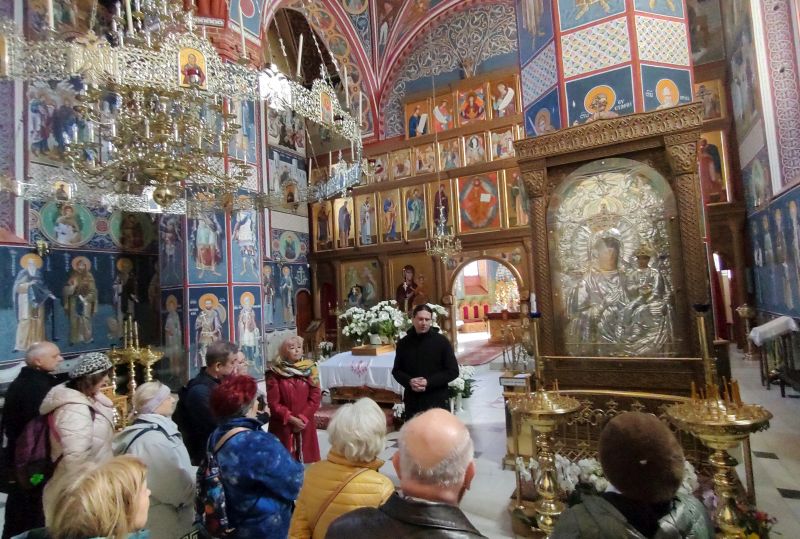
It was founded in the early 16th century and was a major religious and cultural center for centuries. We were especially impressed by the rebuilt Church of the Annunciation, which was destroyed during WWII and then faithfully reconstructed. Unfortunately, what we saw was “only” a very precise reconstruction. Of course, it’s a religious Orthodox building, but it looks like a Gothic brick castle—built on a square plan with high walls and towers at the corners. The temple is stunning with its monumental architecture and beautiful interior, and it’s famous for the vivid frescoes covering the walls. The whole place radiates peace and is full of history. It is a male monastery, currently home to 10 Brothers. Brother Jan, our guide, impressed us with his massive historical knowledge, which he shared in a really interesting way, weaving in a lot of humor and modern-day references. No boredom here! The monastery itself made a huge impression on us.
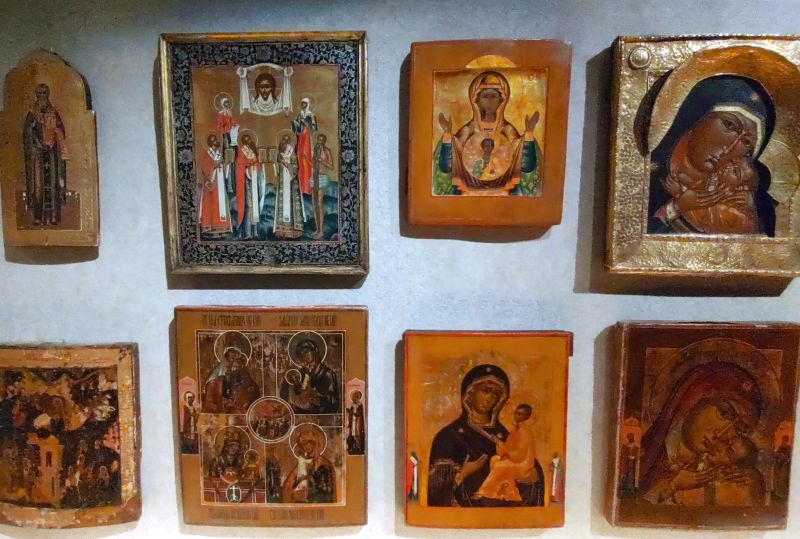
The next stop was the Icon Museum (a branch of the Podlaskie Museum), located in the old Archimandrites’ Palace. It’s one of the most interesting places of its kind in Poland. The museum has a rich collection of icons from the 18th, 19th, and 20th centuries, as well as fragments of 16th-century frescoes saved from the old church. The display includes about 300 icons, sacred objects, and unique frescoes that refer to church interiors, a hermit’s cave, or a village hut. Enhanced by special lighting, they are meant to help visitors understand the role (not just religious, but historical and social) of the icon in Orthodoxy. The museum collection consists of religious paintings, many of them very old and beautifully painted. The museum does a great job explaining how icons were made and why they are important. The vivid colors and amount of detail are surprising. The exhibition was prepared in a modern, multimedia way, making the visit very interesting and allowing us to get to know Orthodox culture better. The visit was quite a reflective experience.
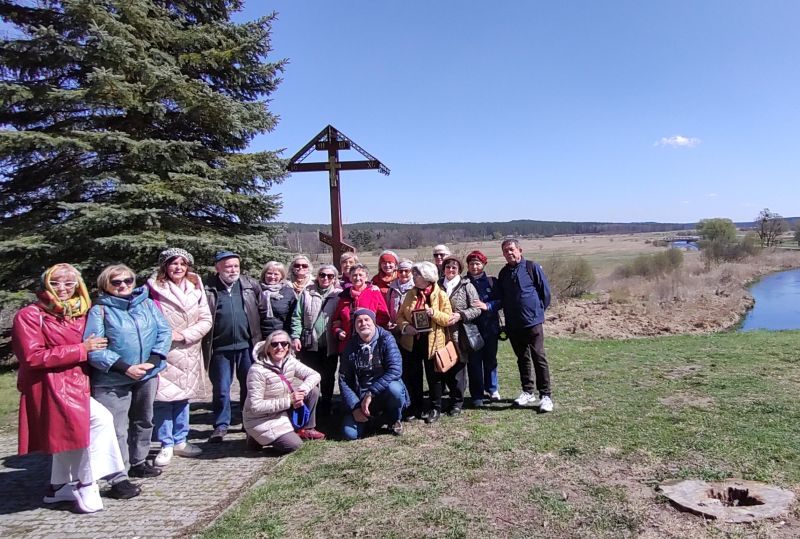
Later on, we happily went with our guide Nina to the town center to see the Market Square. The square in Supraśl is well-kept and surrounded by historic buildings. There’s a peaceful vibe, and we had the chance to see the characteristic architecture of this resort town and learn its history. Of course, there was also time for “a little something-something” at a place Nina recommended called “Jarzębinka.” Our taste buds were 100% satisfied. We definitely didn’t go everywhere and didn’t see everything, but we simply ran out of time. During our walk through Supraśl, we also stopped at the Bucholtz Palace, the Jansen house and factory, and other interesting spots that Nina told us so much about. Thanks to this trip, we got to know the specifics of the region, see valuable monuments, and spend time in a beautiful, peaceful place. Supraśl was definitely worth visiting.
We ended the third day of our trip with a group dinner at the hotel restaurant. There were memories, poems, singing—a very nice atmosphere—and an exchange of gifts. Our dinner wouldn’t be complete without “our Nina,” who was with us from our very first steps at the train station on Monday evening. She served us with both her historical and practical knowledge, for which we thanked her heartily. It was solemn and joyful, and some of the ladies were already dreaming up plans for the next trip. Our President, Bożena, didn’t say “no,” so we’re hoping for another joint getaway soon.
Choosing a Dachshund as a travel companion was a major decision, which resulted in 4 people traveling by car instead of taking the train with the rest of the group. From then on, our only compass was a nose located 10 centimeters above the ground, and our daily schedule depended on the mood and stubbornness of the “princess.” Traveling with a “sausage dog” is an endless pleasure (and a bit of madness), and boredom is a thing of the past.
A dachshund is a miracle of engineering. It’s the only dog that can fit through the tightest aisle on a train, yet somehow manage to take up 110% of a hotel bed.
That’s where, when the cold hits you, the dachshund reveals its superpower as a deluxe heating system. In a car, it takes up very little space (vertically) and infinite space (horizontally). When traveling with a dachshund, you stop being an anonymous tourist. You become “that person with the long dog,” because dachshunds have a natural gift for winning people over – from police officers to strict receptionists. So:
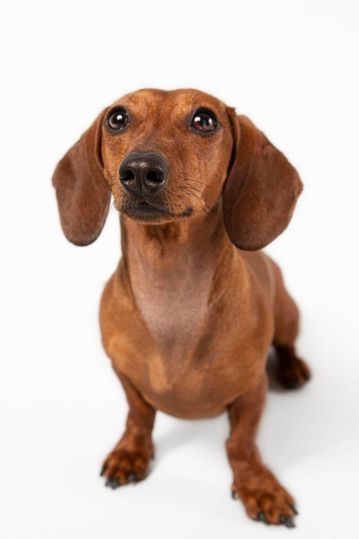 If you have a dachshund dear,
roam the world and have no fear.
For there’s joy in every sense,
from that dachshund’s length immense.
And you’ll be doing just fine,
If he is with you all the time.
This report is a collective work of the trip participants.