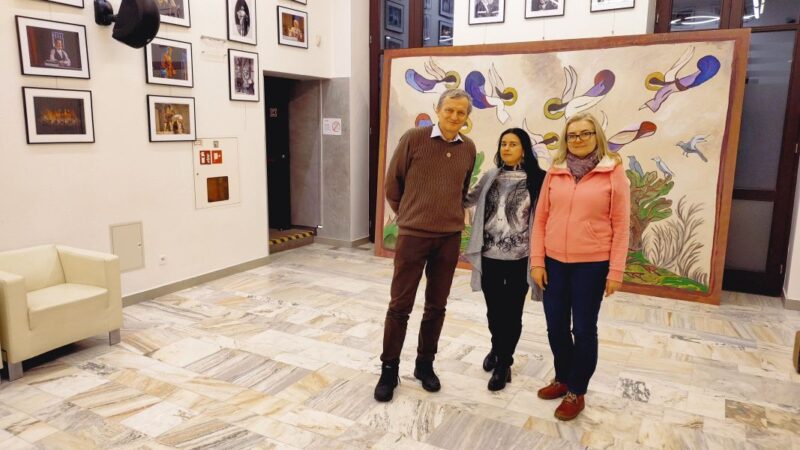
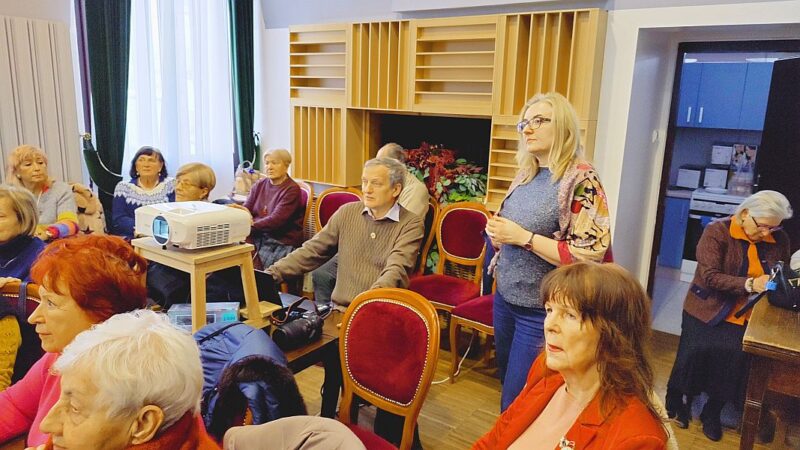
 The February CEM club meeting took place in an “African atmosphere” on 16 February of this year at the MOK cultural center. This was made possible thanks to the presence of guests who, through their stories, transported us to Tanzania.
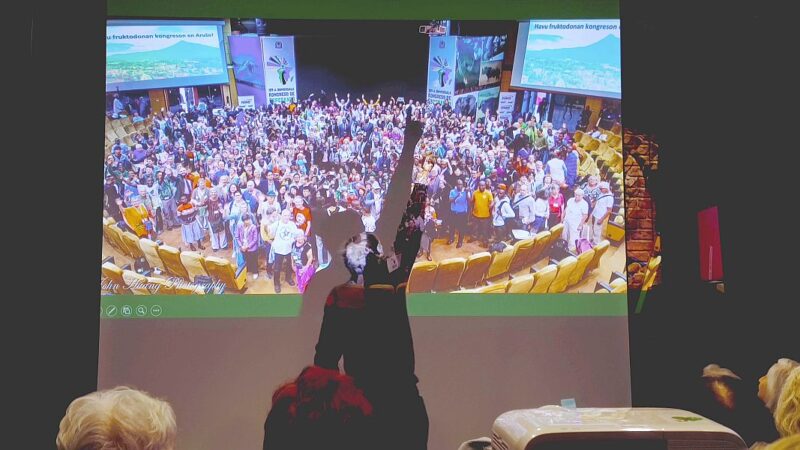
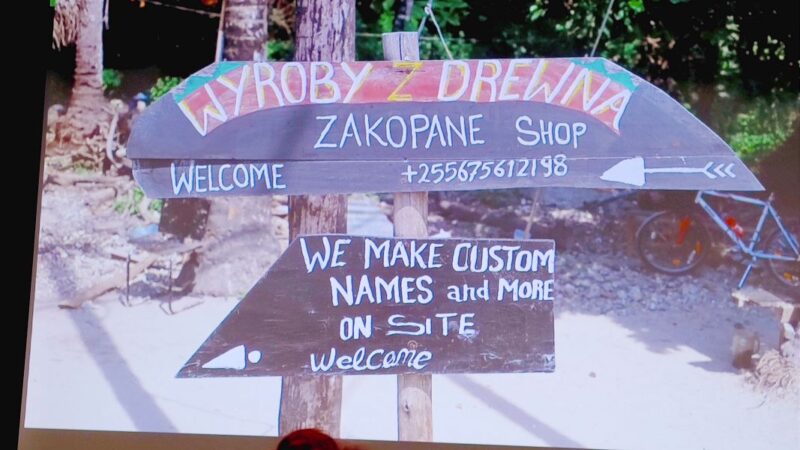
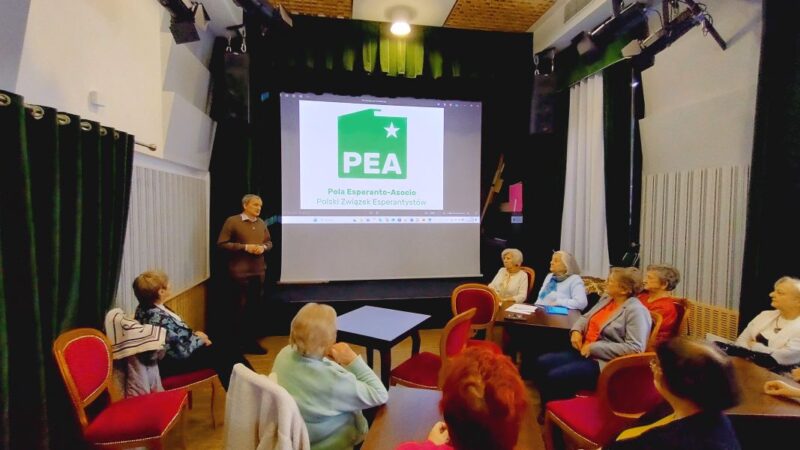
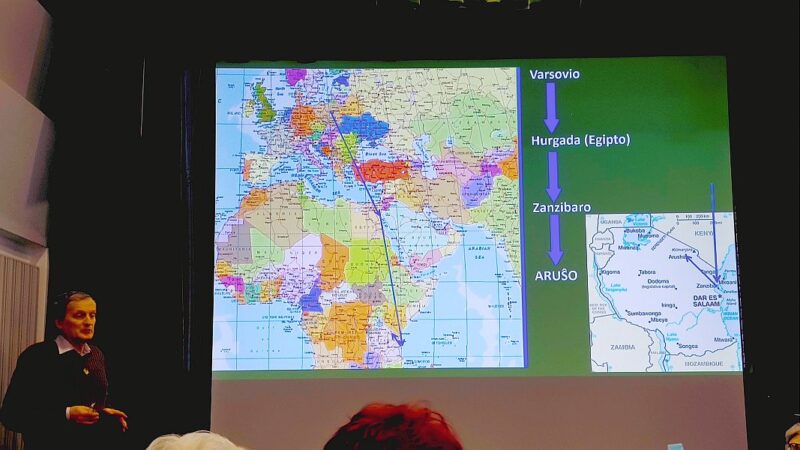
Magdalena Tatara (an Esperantist from Kraków) and Robert Kamiński (President of the Main Board of the Polish Esperanto Association) participated in the 109th World Esperanto Congress, which took place from 3 to 10 August 2024 in Arusha, Tanzania – a historic event, the first of its kind on the African continent. Magda and Robert spoke in a very direct, warm, and engaging way about their journey to the congress venue, about Tanzania and Zanzibar, about the congress itself and its atmosphere, and about the places they visited. All of this was illustrated with photographs they had taken themselves.
Tanzania – the United Republic of Tanzania – is a country in East Africa formed from the union of former British colonies: Tanganyika (German until World War I) and British Zanzibar. This is symbolized by the name created from the first syllables of both countries: TAN + ZAN.
Zanzibar is an island in the Indian Ocean belonging entirely to Tanzania. While presenting the country, the speakers showed important landmarks as well as the everyday life of residents in places that are not wealthy but are colorful with stalls selling local products, where the main means of transport offered to tourists is the motorcycle.
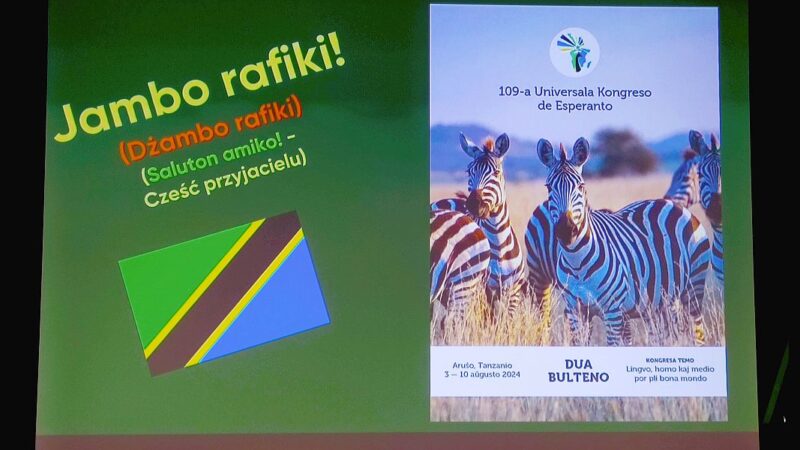
The people of Tanzania are very friendly and open, as shown by their greeting “jambo” (“hello”) and the phrase “hakuna matata”, meaning “don’t worry” or “no problems,” often heard as a greeting or a response to everyday concerns. Although popularized by The Lion King, it is deeply rooted in East African culture.
 . The congress was held at the International Conference Center (AICC) in Arusha, in a hall that can accommodate about 1,500 people. Around 700 participants from more than 60 countries attended, and the main theme was: “Language, people, and the environment for a better world”. Arusha is one of the largest cities in Tanzania (over 600,000 inhabitants), located near the border with Kenya at the foot of the majestic Mount Meru – the second-highest peak in Tanzania after Kilimanjaro. The city of Arusha is the starting point for safaris in northern Tanzania. This gave congress participants the opportunity to take a trip during which they could observe local wildlife from the car windows.
A particularly interesting place to visit was the National Natural History Museum, which features exhibitions on early humans, the plants and animals of the region, and the history of the city. On the museum grounds, a huge tortoise – around 200 years old – roams freely.
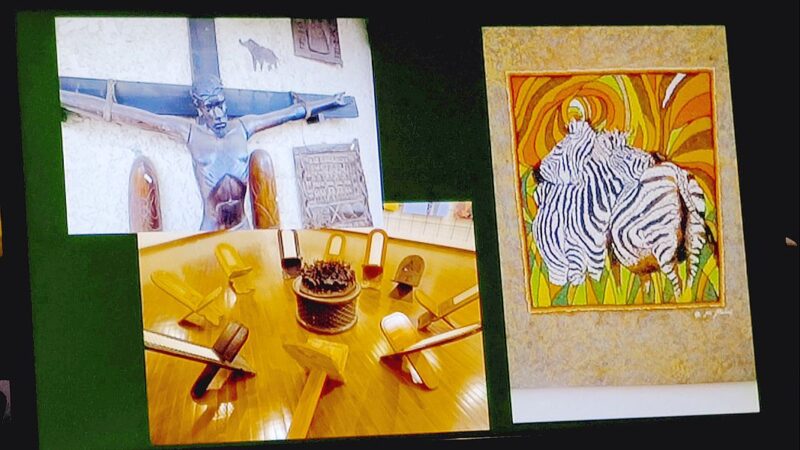
Another important site is the Cultural Heritage Centre, a large art gallery housed in an impressive building inspired by African symbols. The extensive museum complex presents a collection of African art, including wooden sculptures, statues, masks, paintings, furniture, tools, and traditional doors from Zanzibar.
Our guests also spoke interestingly about their visit to the cemetery of Polish refugees in Tengeru, in the Arusha region. This cemetery is the largest and best-preserved burial site of Polish citizens in Tanzania and in all of Africa. It is the resting place of 150 Polish exiles from World War II who accompanied General Anders’ Army on its journey from the Soviet Union to Iran and Palestine. They were transported and settled in British colonies, including the territory of then Tanganyika (now Tanzania). The refugees established settlements, the largest of which was in Tengeru, with about 5,000 inhabitants. The cemetery, like other Polish cemeteries in Tanzania, is maintained by the Polish Embassy in Tanzania and is very well cared for – which is exceptional compared to local burial sites, which are not preserved or commemorated in this way.
The organization of the trip to Tengeru was assisted by the then Vice-Consul of the Polish Embassy in Tanzania, Krystyna Fatyga, who also took part in the visit and recounted the cemetery’s history. The account given by our guests – enriched with many photographs and personal impressions – transported the meeting participants to another fascinating and, in many ways, little-known African country.
The congress held in Tanzania highlighted the growing interest in the language and the increasing role of Esperanto in Africa. The stories about the congress – which included scientific and cultural events, environmental initiatives, and ecumenical services – confirmed that it is an event promoting unity, cooperation, and Esperanto as a tool connecting people across cultural boundaries.
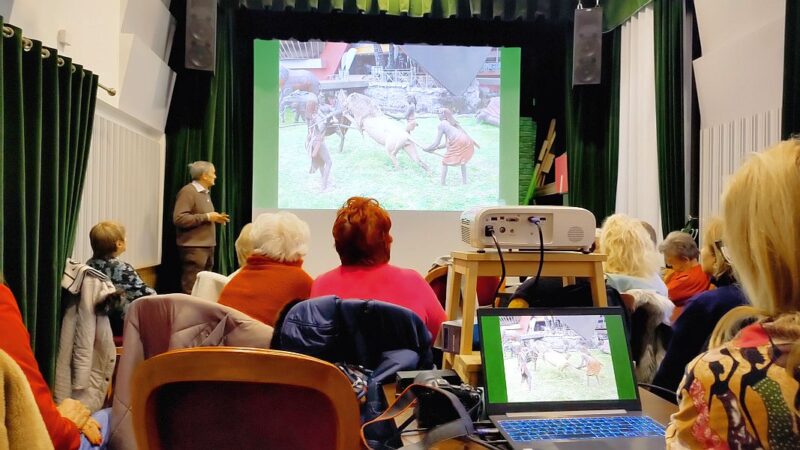
The presentation by Magdalena Tatara and Robert Kamiński was warmly received by the participants and rewarded with loud applause. During the meeting, the President of the Main Board of the Polish Esperanto Association, Robert Kamiński, presented brief information about the association’s activities and invited everyone to participate in the 43rd Polish Esperanto Congress, which will take place in Bielsko-Biała from 23 to 26 July 2026.
Maria Baran